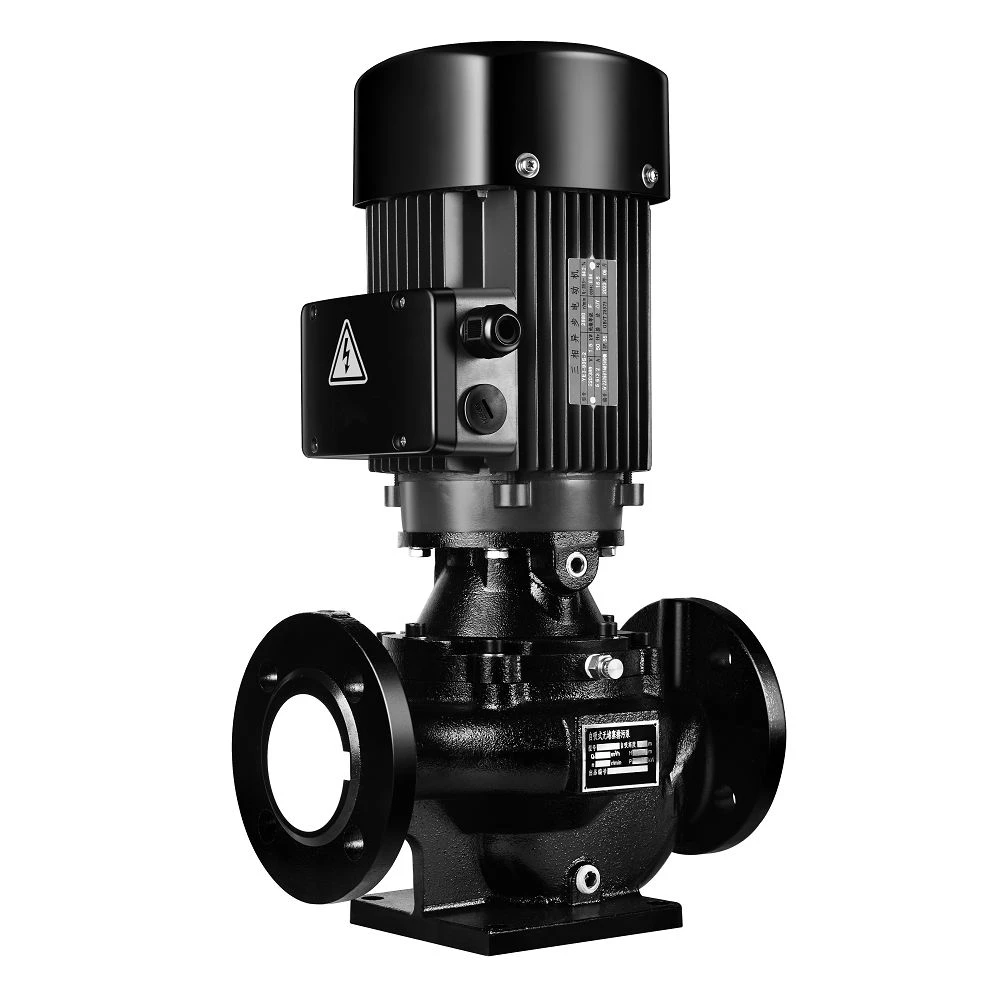
The suction lift of a pipeline pump typically refers to the maximum vertical distance from which the pump can draw liquid from a lower level up to its inlet. According to the national standard GB/T 5656-2008 ("Technical Specifications for Centrifugal Pumps") and common industry practices, the theoretical suction lift for standard centrifugal pipeline pumps ranges from 3 to 8 meters, depending on the following factors:
Atmospheric Pressure: Under standard atmospheric pressure (1.013 × 10⁵ Pa), the theoretical maximum suction lift is 10.33 meters; however, due to friction losses and Net Positive Suction Head (NPSH) limitations, the actual lift typically reaches only 6 to 8 meters.
Liquid Properties: Suction lift is higher for clean water, whereas it is significantly reduced for liquids with high viscosity (such as oils) or those prone to vaporization (such as liquefied gas). For instance, the suction lift for clean water at 20°C can reach 7 meters, while for gasoline, it is only about 4 meters.
Pump Type: Self-priming pipeline pumps can achieve a suction lift of 5 to 8 meters thanks to specialized designs (such as a liquid storage chamber), whereas standard centrifugal pumps require priming before startup and generally have a suction lift of no more than 5 meters.