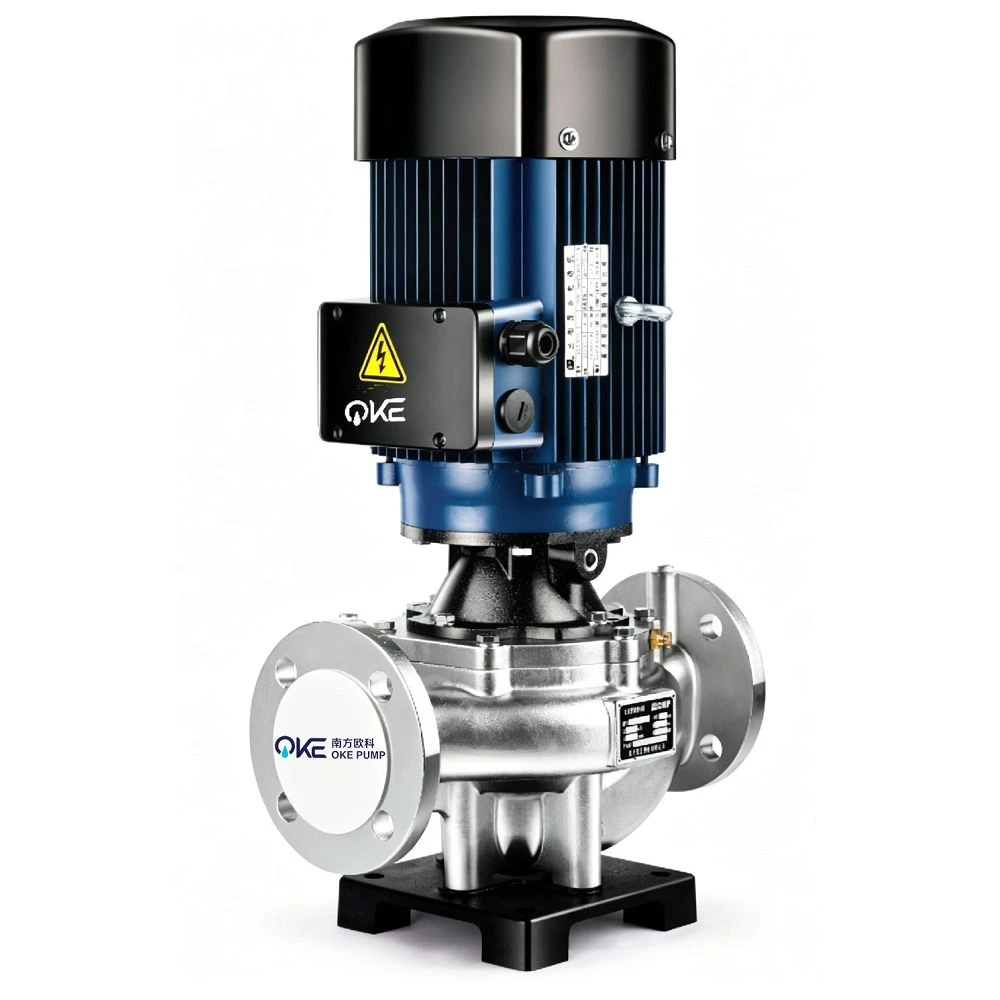
The suction lift of a pipeline pump generally ranges from 5 to 30 meters. The specific value depends on factors such as the pump's design, the configuration of the piping system, and the properties of the fluid being transported. Below are details regarding the suction lift of pipeline pumps:
1. Basic concept of suction lift: Suction lift refers to the effective range over which a pipeline pump can draw liquid from the inlet to the outlet. It is a key performance indicator for pipeline pumps. In practice, the ability to successfully draw liquid into the pump depends on the pump's own suction capability, the design of the piping system, and environmental conditions.
2. Factors affecting suction lift: First, the pump's design directly influences its suction capability; different designs are suited to different applications and offer varying suction performance. Second, the piping system configuration plays a role; factors such as pipe length, diameter, and the number of bends affect fluid flow. Finally, the properties of the transported medium-such as viscosity, density, and temperature-are also critical determinants of suction lift.
3. Practical application and limitations: In real-world scenarios, the suction lift of a pipeline pump may be constrained by various conditions. Factors such as changes in elevation, pipeline slope, and the number of elbows can impact the actual suction lift achieved. Therefore, when selecting and using a pipeline pump, it is essential to determine the appropriate suction lift based on the specific application requirements and operating conditions.